
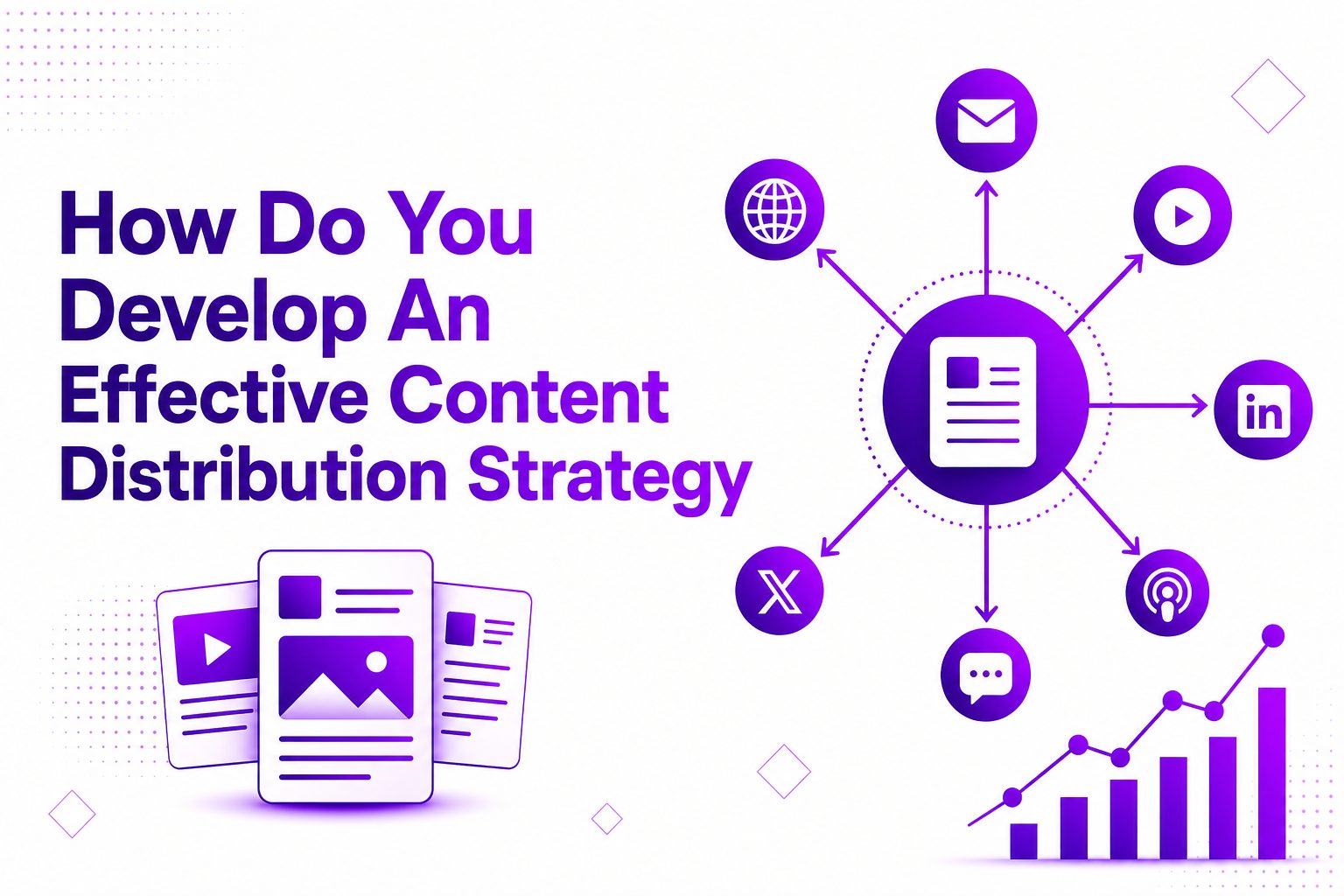
Content distribution is no longer a final step after publishing. It is part of content planning from the beginning. A strong distribution strategy helps every article, video, guide, and campaign reach the right audience through the right channels.
Many brands publish useful content but fail to gain traction because they depend only on organic search or occasional social posting. Effective distribution creates repeatable visibility across search, email, social media, communities, partnerships, and paid channels.
When marketers ask how do you develop an effective content distribution strategy, the answer starts with audience behavior, channel selection, message fit, and consistent measurement. Distribution works best when it supports business goals, not just traffic growth.
Clear Goals for Content Distribution
Every distribution plan needs a clear purpose. Some campaigns aim to build brand awareness, while others focus on leads, sales, engagement, retention, or authority. Without goals, channel activity becomes busy work instead of measurable progress.
A blog post for early-stage readers may need social sharing, SEO, and newsletter placement. A product comparison article may perform better through search, retargeting, and sales enablement. Each goal should shape the channel mix.
Clear goals also help teams prioritize resources. A small team cannot be active everywhere with equal quality. When goals are specific, content creators can focus on the channels most likely to move readers toward meaningful action.
Audience Research That Shapes Reach
Audience research shows where people spend time, what problems they care about, and how they prefer to consume information. Distribution becomes easier when content matches the habits and expectations of real readers.
Research should include search intent, social conversations, newsletter behavior, community discussions, and customer feedback. These signals reveal whether your audience wants quick tips, detailed guides, expert opinions, comparisons, case studies, or practical checklists.
A strong audience profile connects content topics with channel behavior. For example, executives may prefer LinkedIn insights and email briefs, while technical users may rely on search, forums, documentation, and peer recommendations.
Useful audience research inputs include:
- Customer interviews focused on content habits
- Search queries with clear intent
- Social media comments and shares
- Sales team questions from prospects
- Newsletter engagement patterns
- Community discussions and forum threads
- Competitor content performance signals
Content Audit Before Channel Planning
A content audit helps identify which assets are worth distributing, updating, repurposing, or retiring. Not every published page deserves the same promotional effort. Strong distribution begins with knowing what content already performs.
Review traffic, rankings, backlinks, conversions, engagement, and content freshness. Some older articles may only need better internal links and updated examples. Others may be suitable for newsletters, social posts, short videos, or lead magnets.
A useful audit also highlights content gaps. If your audience asks detailed questions but your content only covers broad topics, distribution will struggle. Strong channels cannot fix content that lacks relevance, depth, or clarity.
Channel Selection With Practical Fit
The best distribution channels depend on your audience, content type, budget, and team capacity. Search, email, LinkedIn, YouTube, podcasts, communities, partnerships, and paid ads all serve different roles in a modern strategy.
Organic search is useful for evergreen demand, while email supports repeat engagement. Social channels help with timely conversations and brand presence. Communities build trust when participation is genuine and not only promotional.
Channel selection should be intentional. A B2B software company may prioritize SEO, LinkedIn, webinars, and email. A lifestyle brand may rely more on Instagram, Pinterest, TikTok, creator partnerships, and visual storytelling.
Strong distribution channels often include:
- Owned channels such as blogs and newsletters
- Search engines for long-term visibility
- Social platforms for reach and engagement
- Communities for trusted conversations
- Partner channels for borrowed credibility
- Paid media for targeted promotion
- Sales channels for bottom-funnel content
Content Formats for Wider Reach
One idea can support several content formats when repurposed carefully. A long-form blog post can become a newsletter, carousel, short video script, webinar outline, podcast topic, infographic, or sales resource.
Repurposing should not mean copying the same message everywhere. Each format needs a suitable angle, length, tone, and call to action. A social post should feel native to the platform, not like a pasted blog excerpt.
This approach increases return on content investment. Instead of creating new ideas every day, teams can build content systems around strong topics. Repurposing also helps different audience segments engage in their preferred format.
SEO as a Distribution Foundation
SEO is one of the most reliable distribution foundations because it captures demand over time. When content ranks for relevant queries, it keeps attracting readers without constant manual promotion or advertising spend.
Keyword research should match search intent, not just volume. A high-volume keyword may bring weak results if readers are not aligned with the content offer. Intent helps decide whether the page should educate, compare, guide, or convert.
Internal linking also supports distribution by moving readers between related assets. For example, a guide on content marketing planning can link naturally to content marketing strategy resources at /content-marketing-strategy/ when the topic fits the reader journey.
Email Distribution for Loyal Readers
Email remains powerful because it reaches people who already chose to hear from your brand. A newsletter can send new content directly to interested readers without depending fully on algorithms or search rankings.
Effective email distribution needs segmentation. New subscribers may need educational content, while existing customers may prefer product tips, case studies, and advanced guides. Sending the same message to everyone often lowers engagement.
Subject lines, preview text, send time, and content placement all matter. The email should clearly show why the reader should click, but it should also provide value even when the reader does not visit the full article.
Social Media Distribution With Native Context
Social media distribution works best when content is adapted to each platform. LinkedIn favors professional insight, Instagram supports visual storytelling, X can support sharp commentary, and TikTok or Shorts work well for quick, useful ideas.
Posting only links rarely creates strong engagement. Summaries, quotes, data points, personal lessons, and short frameworks usually perform better. The goal is to give value in the feed while offering a deeper resource for interested readers.
Consistency matters more than random bursts. A simple posting calendar can turn one blog post into several platform-specific updates. Strong social distribution respects both the audience and the way each platform encourages interaction.
Community and Partnership Distribution
Communities can create high-quality reach when participation is authentic. Industry groups, Slack communities, forums, associations, and niche platforms often contain people who care deeply about specific problems and solutions.
The mistake many brands make is posting links without context. A better approach is to answer questions, share useful insights, and reference content only when it genuinely helps. Trust comes before traffic.
Partnerships can also extend distribution. Guest newsletters, co-created webinars, expert quotes, podcast appearances, and partner resource pages can place content in front of relevant audiences that already trust the host.
Paid Promotion With Clear Intent
Paid promotion can speed up distribution when organic reach is slow or competitive. It works especially well for high-value content such as reports, webinars, comparison pages, lead magnets, and product education.
Paid channels need clear targeting and a defined next step. Sending broad traffic to a generic blog post may waste budget. Better results usually come from matching audience stage, message, creative, and landing page intent.
Small tests are practical before scaling. Test headlines, audiences, offers, placements, and formats. Paid distribution should support content that already has strong relevance, not compensate for weak content or unclear positioning.
Editorial Calendar and Promotion Workflow
A content calendar should include both creation and distribution. Many teams schedule publishing dates but forget newsletter slots, social posts, internal promotion, sales enablement, and repurposing tasks.
A practical workflow assigns responsibilities before the content goes live. Writers, editors, designers, social managers, email marketers, and sales teams should know how each piece will be promoted and reused.
This prevents last-minute promotion. When distribution is planned early, content can include stronger hooks, visuals, quotes, internal links, calls to action, and channel-ready snippets from the beginning.
Content calendar fields should include:
- Primary audience
- Target keyword
- Search intent
- Main channel
- Secondary channels
- Publishing date
- Promotion dates
- Repurposing ideas
- Owner for each task
- Success metric
Internal Linking and Reader Journey
Internal links help readers move from one useful resource to another. They also help search engines connect related pages. A strong distribution strategy treats internal linking as part of content experience, not just SEO.
Links should feel natural and useful. A beginner article can point readers to a deeper guide, while an advanced guide can link to case studies, tools, or service pages. The anchor text should describe the destination clearly.
For example, an article about distribution can naturally guide readers toward a content calendar template at /content-calendar-template/ if the page helps them act on the topic without interrupting the reading flow.
Measurement and Performance Tracking
Measurement shows whether distribution is working. Page views alone are not enough. Teams should also review engaged sessions, email clicks, social saves, conversions, assisted conversions, backlinks, rankings, and sales feedback.
Each channel needs the right metric. Email may be judged by clicks and replies, social by engagement and referral traffic, SEO by rankings and organic conversions, and paid promotion by cost per qualified action.
Tracking should lead to decisions. If LinkedIn posts bring engaged readers but X brings little activity, adjust effort. If search traffic grows but conversions stay low, improve the offer, internal links, or page intent.
Republishing and Refreshing Existing Assets
Distribution does not end after launch week. Strong content can be refreshed, republished, and promoted again when it gains new data, examples, visuals, or practical value for readers.
Older content often has hidden potential. A page ranking on the second search results page may improve with updated sections, better headings, clearer examples, and stronger internal links. Refreshing can be faster than creating from scratch.
Repromotion should be planned thoughtfully. A refreshed article can become a newsletter feature, social thread, short video, or sales resource. This gives existing work a longer life and improves overall content efficiency.
Team Alignment Across Marketing and Sales
Content distribution improves when marketing and sales share insights. Sales teams know common objections, decision criteria, and questions from prospects. Marketing can turn those insights into assets that support the buying journey.
Sales teams also need easy access to relevant content. A useful distribution strategy may include internal libraries, CRM links, email templates, and short summaries that help sales representatives use content during conversations.
Alignment creates feedback loops. If a guide helps close deals, create related content. If prospects ignore a resource, review its relevance, format, or placement. Distribution is stronger when teams learn from real customer interactions.
Mistakes That Weaken Distribution
One common mistake is publishing without promotion. Content does not automatically reach the right audience just because it is useful. Promotion needs planning, timing, ownership, and repeated effort across selected channels.
Another mistake is treating every platform the same. A blog link copied across all channels rarely performs well. Each audience needs a specific reason to care, shaped by platform behavior and content context.
Teams also weaken results by measuring too narrowly. Traffic can look good while business impact stays low. Strong distribution connects visibility with engagement, trust, leads, sales, retention, or another meaningful outcome.
Common issues to avoid include:
- Publishing without a channel plan
- Ignoring search intent
- Using the same copy everywhere
- Promoting only once
- Choosing too many channels
- Skipping email segmentation
- Forgetting internal links
- Tracking traffic without quality signals
A Practical Content Distribution Framework
A useful framework starts with the content goal, target audience, core message, primary channel, secondary channels, and success metric. This keeps distribution focused before production begins.
Next, shape the content for each channel. Create search-friendly structure for the blog, concise angles for social, a clear email hook, and useful snippets for sales or community sharing. This reduces friction after publishing.
Finally, review results and improve the next cycle. Distribution is not a fixed checklist. It becomes stronger through testing, audience feedback, content updates, and better coordination across channels.
Conclusion
A strong content distribution strategy connects audience behavior, content quality, channel fit, workflow, and measurement. It helps valuable content reach people who can benefit from it, instead of relying on chance after publication.
The best results come from planning distribution before writing, repurposing strong ideas, using owned and external channels wisely, and tracking performance beyond surface-level traffic. Consistency matters more than scattered promotion.
If you are asking how do you develop an effective content distribution strategy, start with clear goals, focused channels, useful content formats, and repeatable promotion habits that support both readers and business outcomes.